
The CRM that's a pretty spreadsheet
A lead arrives, someone types it in, and nothing happens. By the time you notice, it's gone — and no one can say when, or why. The system kept the name and lost the story.
Desk + comm — the sales desk
AI agents answer on WhatsApp, qualify the lead and move the pipeline — every action recorded and auditable. On your own server, with no per-seat pricing.
MIT licence · no paid tier · 4 GB of RAM

A lead arrives, someone types it in, and nothing happens. By the time you notice, it's gone — and no one can say when, or why. The system kept the name and lost the story.
Fast to answer, happy to say anything, then gone. If it promised a deadline that doesn't exist, your customer tells you. You can't audit what it said — let alone why it said it.
Both share one root cause: the system isn't responsible for what happens next.
The category
Living has a definition — and it was written in the repository before it was written on this page. Five rules every part of the system must satisfy to ship.
Every piece has an input and an output. The architecture map is public in the repo.
A stalled request shows up in the Radar, classified by risk — before it becomes a loss.
Seven guardrails before each send. Each one becomes a record — including the ones that block.
Every meaningful mutation becomes an activity on the timeline, visible on screen.
An open request with no defined next step is treated as a leak in the system.
This isn't what we promise — it's the bar a change has to clear to enter the system. It lives in docs/doctrine/sistema-vivo.md, and the seven-question checklist is answered before every merge.
The life of a lead
“Do you deliver to Salvador?” Before any reply, the system already knows who this is: history, orders, what was agreed last time.
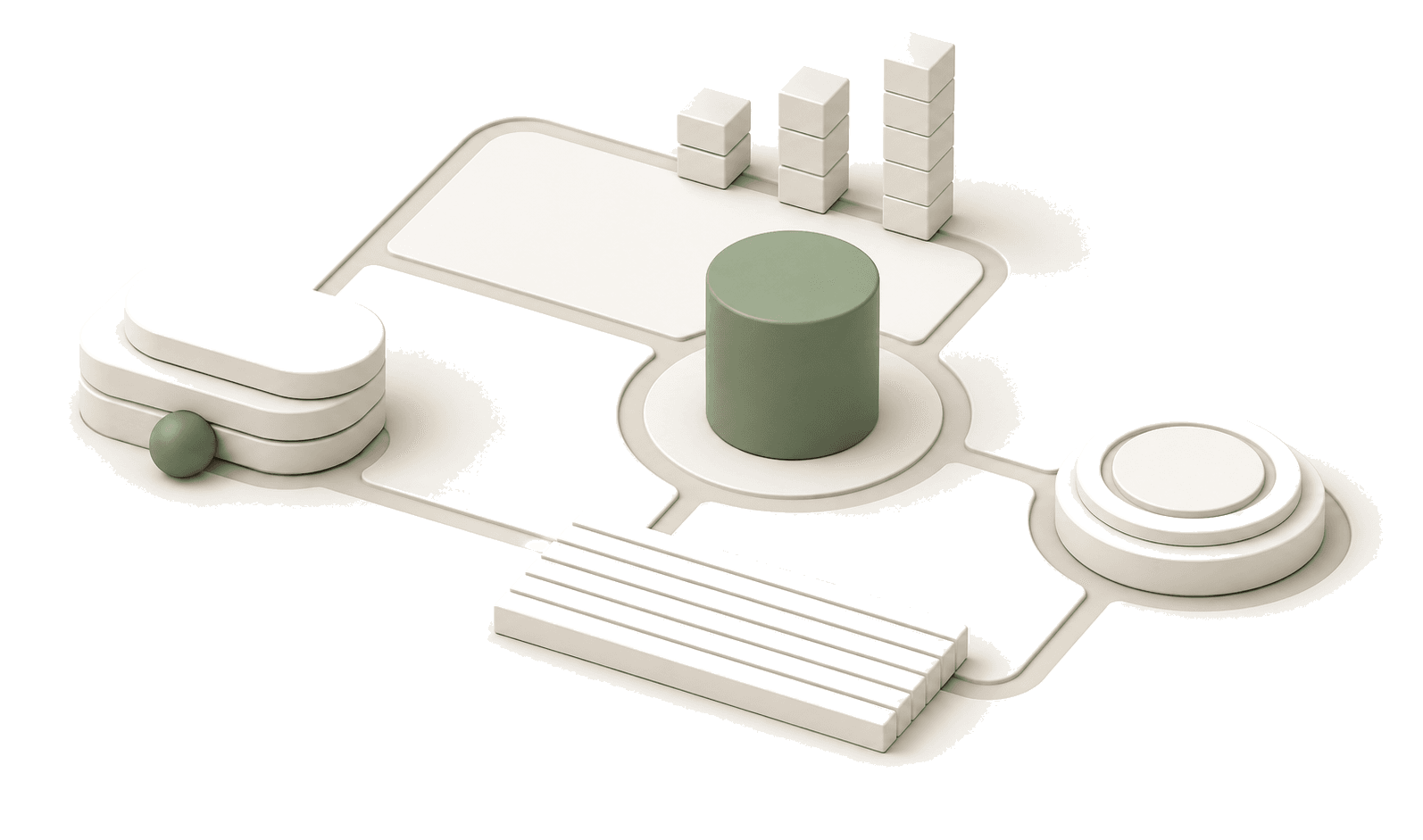
It searches your company's knowledge base — your lead times, your policy, your catalogue. It doesn't invent.
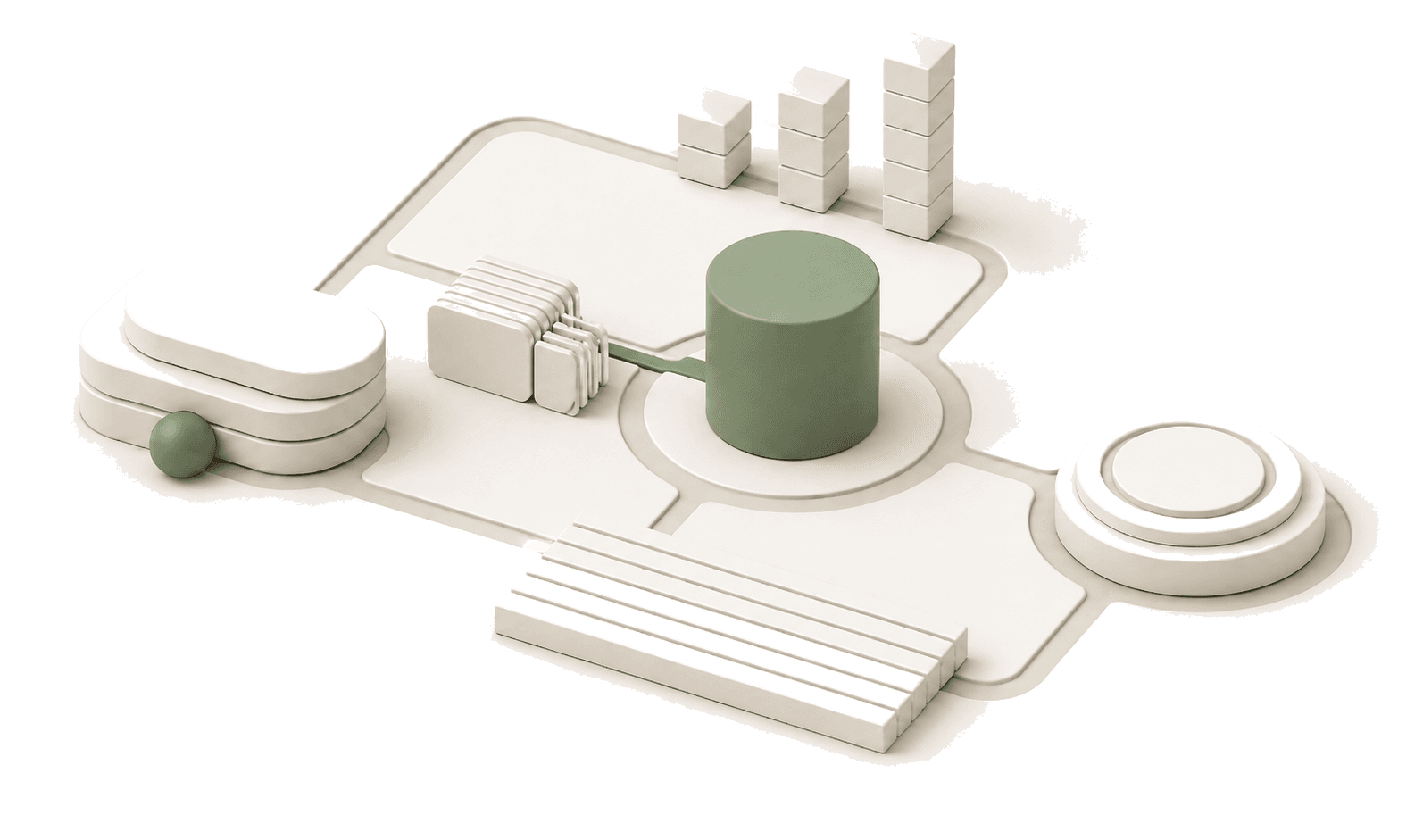
Opt-out, privacy, anti-ban, copy variation, deterministic promise, semantic promise and automation disclosure. In that order, always.

The agent was about to promise 24-hour delivery. The guardrail blocked it: that lead time doesn't exist in your catalogue. What it was going to say — and why it didn't — is on the record.
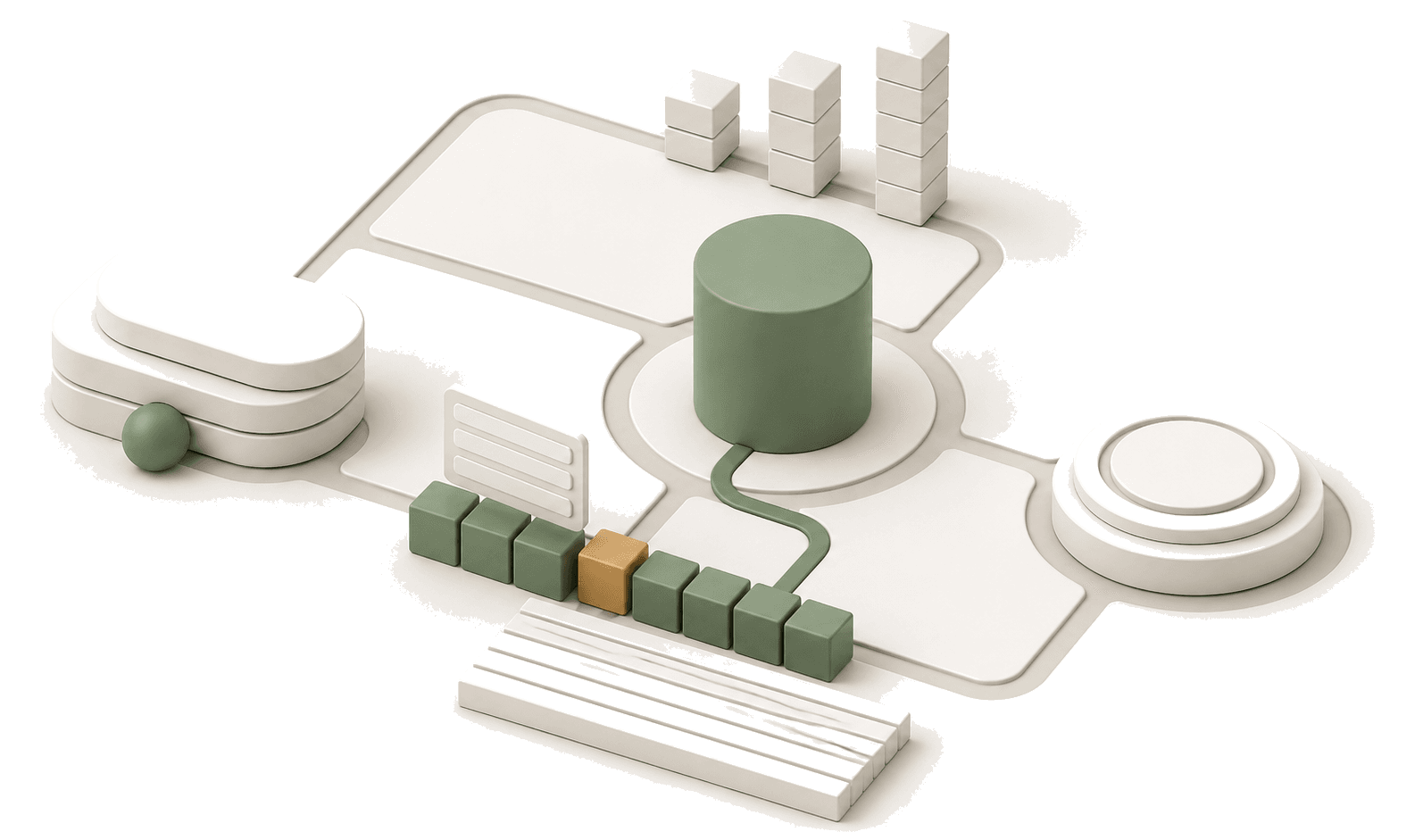
Once qualified, it changes pipeline stage. The tag lands, the owner is set — and every move carries a recorded reason.
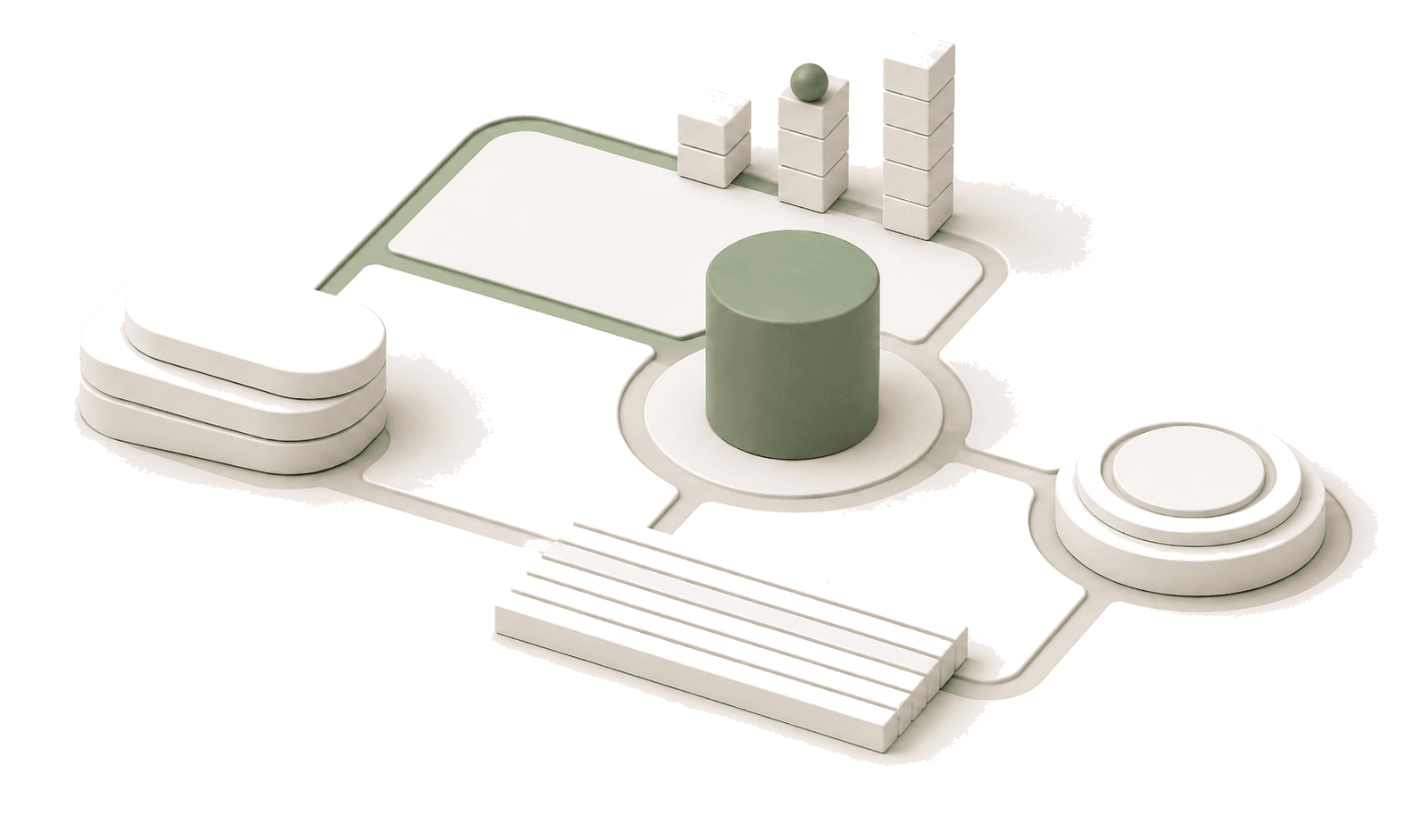
Not the raw thread: a summary of what happened, what was agreed, which objections came up and what the next step is.
A follow-up is scheduled. If it goes cold, the lead appears in the Radar classified by risk — before it turns into a loss.
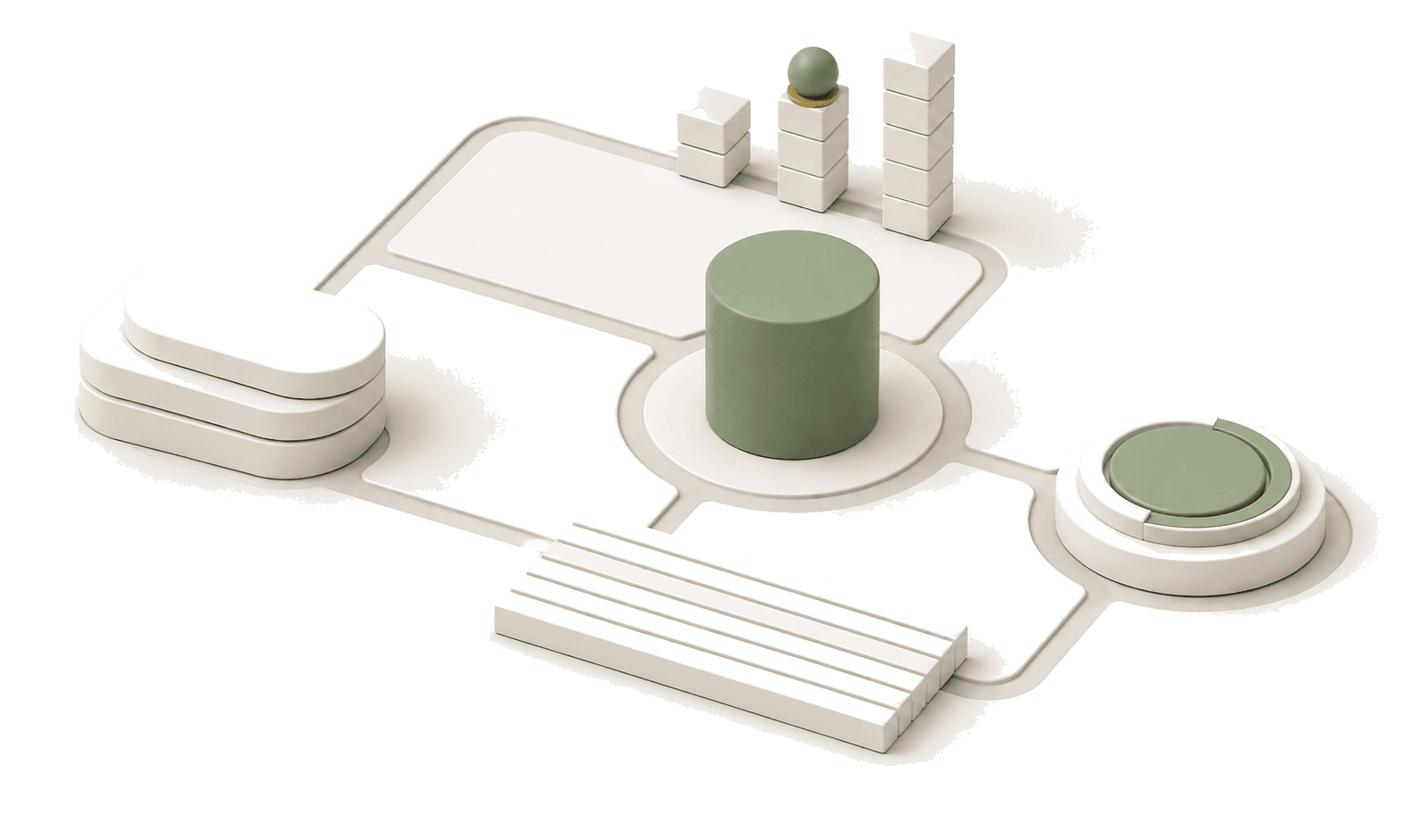
Installation
The script checks dependencies, generates every secret, applies the database, creates the first admin, brings the containers up and wires the scheduled task that fires automations.
# 1. get the project
git clone https://github.com/melgarafael/DeskcommCRM.git
cd DeskcommCRM/hostgator-setup-kit

# 2. install
bash install.sh
After that: open your domain, enrol the admin's two-factor and scan the WhatsApp QR. All from the screen.
Updating doesn't break it
bash update.sh backs up the database first, reapplies the schema idempotently and health-checks at the end. The upgrade path is tested in CI — not merely documented.
Picture course
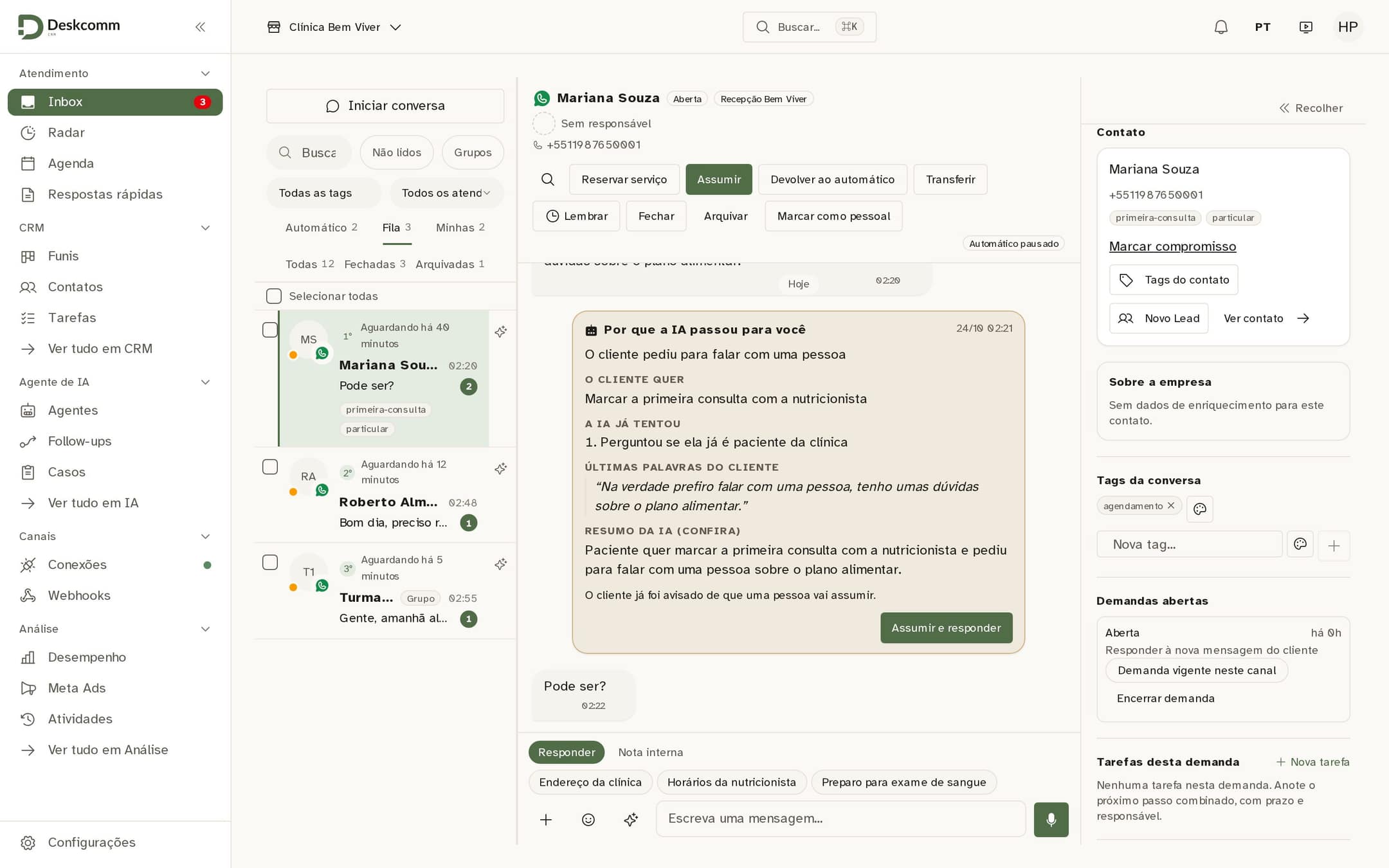
Each lesson shows the real DeskComm screen, with arrows pointing where to click and what happens next. Read at your own pace or practice in the simulator before your first customer. The course is in Portuguese, the language of the screenshots.
Free. Screenshots come from a demo clinic, with made-up names and conversations.
Pricing
There's no paid tier, no gated feature, no per-seat charge. What you pay for is the VPS it runs on and the AI keys you consume.
MIT licence
Use it, modify it, resell it. Commercially too, without asking permission.
No paid tier
What you install today is the complete product. There's no tier waiting for you to grow.
Your bill doesn't grow with the team
Five people in sales or fifty cost the same VPS.
Closed platforms charge per seat: the cost climbs with the team, in the same year you hire. Here the cost belongs to the server, and the server doesn't know how many people use it.
Proof
Every claim on this page points at a file in the public repository. If one of them doesn't hold, that's a bug — and worth an issue.
Tenant isolation is tested on every change. CI boots a clean Postgres and runs 364 invariant tests. One of them creates two organizations and proves that one sees zero rows of the other — and a control case first proves those rows exist, otherwise the test would pass against an empty table.
tests/invariants/rls-isolation.test.tsSeven guardrails before every send, in fixed and versioned order. Each evaluation becomes a durable, exportable record — including the ones that blocked a message.
lib/agent-engine/guardrails/before-send.tsUpdating doesn't break: the schema is applied to a fresh database and reapplied to an existing one, proving idempotency. The upgrade path is tested, not merely documented.
scripts/test-db.shMIT licence, no paid tier, no gated features. What you install is the complete product.
LICENSEAnti-death
The Radar answers that. Every open request is classified by time without interaction and by what's still pending. Not last month's report — the state right now.
A number on screen that doesn't change a decision is noise. This one does.
Multi-vertical
Pipeline vocabulary is configurable. It's not a theme, not a fork, not a “clinics edition” — it's the same core, configured.
E-commerce
Customer
lead →
Paid
won →
Clinic
Patient
lead →
Booked
won →
Real estate
Prospect
lead →
Closed
won →
Services
Enquiry
lead →
Signed
won →
For agencies
Two variables in .env change the name and logo across the whole interface — without touching code, because edited code is lost on the next update. MIT licence: modify it, host it for third parties, charge for it.
What it still does NOT do: colours and fonts require changing the design system, and branding is per installation, not per organization. It's written in the guide — better you know now than find out in front of your client.
Read the agency guide →The software is free and open source under the MIT licence. There is no paid tier and no gated feature. You only pay for infrastructure: the VPS and the AI keys you consume.
No, but you do need to follow a step-by-step and have your credentials at hand. Installation is one command, and the kit ships an AI assistant that walks you through it in conversation.
4 GB of RAM is the recommendation. The stack boots on 2 GB but runs at the edge: seven containers, and each WhatsApp session costs about 150 MB.
Any business that sells through conversation. Pipeline vocabulary is configurable, so the same system serves e-commerce, clinics, real estate, info-products and service providers.
Yes. The MIT licence allows commercial use, modification and redistribution, and there is no clause forbidding hosting for third parties.
Every message passes seven checks before going out, and all of them are recorded — including the ones that blocked a send. When the agent shouldn't proceed alone, it hands off to a human with a summary of what happened.
Wherever your VPS is. You host it, you own it — the maintainers have no access to your instance.
Run bash update.sh. It backs up the database first, reapplies the schema idempotently and health-checks at the end.
Official partner
Datacenter in Brazil, no international data transfer. It's where DeskcommCRM was built to run — the VPS NVMe 4 plan handles it comfortably.
partner link — subscribing through it supports the project